
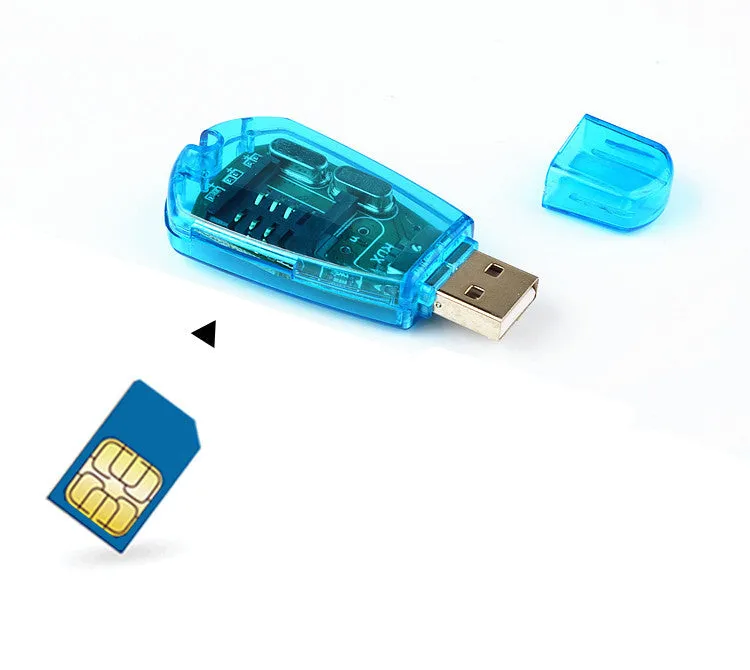
USB SIM card reader for mobile phones external device with blue casing for reading editing and backing up contacts SMS messages ringtones pictures supports QQ ICQ MSN data exchange computer connection


USB SIM card reader for mobile phones external device with blue casing for reading editing and backing up contacts SMS messages ringtones pictures supports QQ ICQ MSN data exchange computer connection
USB SIM Card Reader for Mobile Phones: External Blue Device for Data Management

This external USB SIM card reader provides a direct link between your mobile phone's SIM card and your computer. Designed with a blue plastic casing, it uses a USB 2.0 interface for a straightforward connection, bypassing the need for complex software or Bluetooth pairing. Its core function is to give you desktop-level control over the data stored on your SIM card, including your phone book, text messages, ringtones, and image files. This device is a practical tool for anyone needing to archive old messages, manage large contact lists efficiently, or transfer multimedia files without relying on a data cable or wireless connection for the phone itself.
Features and Construction

This reader is built around its primary function of SIM card data access. The available specifications focus on its connectivity and the scope of data it can handle, offering a clear utility for specific data management tasks.
Material and Build
The device is described as having an external installation method and a blue finish. Typical of such computer accessories, the main construction material is plastic, which houses the internal electronics and the SIM card slot. The build is centred on providing a reliable physical and data connection between the SIM card and the computer's USB port, with no extraneous features mentioned.
Size and Practical Fit
As an external USB device, its form factor is designed for portability and easy storage. The source text does not provide specific measurements, but devices of this type are generally compact, similar to a standard USB flash drive or slightly larger to accommodate the SIM card tray. This makes it easy to carry in a laptop bag or desk drawer, ready for use whenever you need to access or back up your SIM card's contents.
Uses and Placement

The reader's functionality dictates its primary use cases, which revolve around data management, backup, and transfer scenarios where direct computer access is preferable.
Event or Professional Use
In professional or administrative settings, this tool can be valuable for batch processing contact information. The mentioned function for batch modification of the phone book allows for updating company directories or managing group lists efficiently. The ability to print SMS messages could support record-keeping or archival purposes for small businesses or individuals who need physical copies of communication logs.
Everyday Home Use
For personal use, it simplifies common tasks like creating a backup of text messages and contacts before changing phones or performing a factory reset. It also facilitates the transfer of favourite ringtones or pictures from an old SIM card to a new device's storage. The support for storing data from instant messaging services like QQ, ICQ, and MSN on the SIM card adds a layer of data portability for users of those platforms.
Benefits and Buying Value
The value of this product lies in its focused functionality and the direct control it offers over a specific type of mobile data storage, the SIM card.
Reuse and Low Maintenance
The device has no consumable parts and requires minimal maintenance. Its utility extends across multiple phones and upgrades, as long as the devices use a compatible SIM card format. It serves as a long-term tool for managing data independently of the phone's operating system or brand, provided the data is stored on the SIM itself.
Why Choose This Product
You would choose this SIM card reader if your primary need is to directly access, edit, and back up data stored specifically on your mobile phone's SIM card. It is a specialist tool that offers a simple, wired solution for this task, which can be more reliable or straightforward than wireless methods or proprietary phone software. It is particularly relevant for managing basic phone data like contacts and SMS, especially for older phone models or specific archival workflows.
