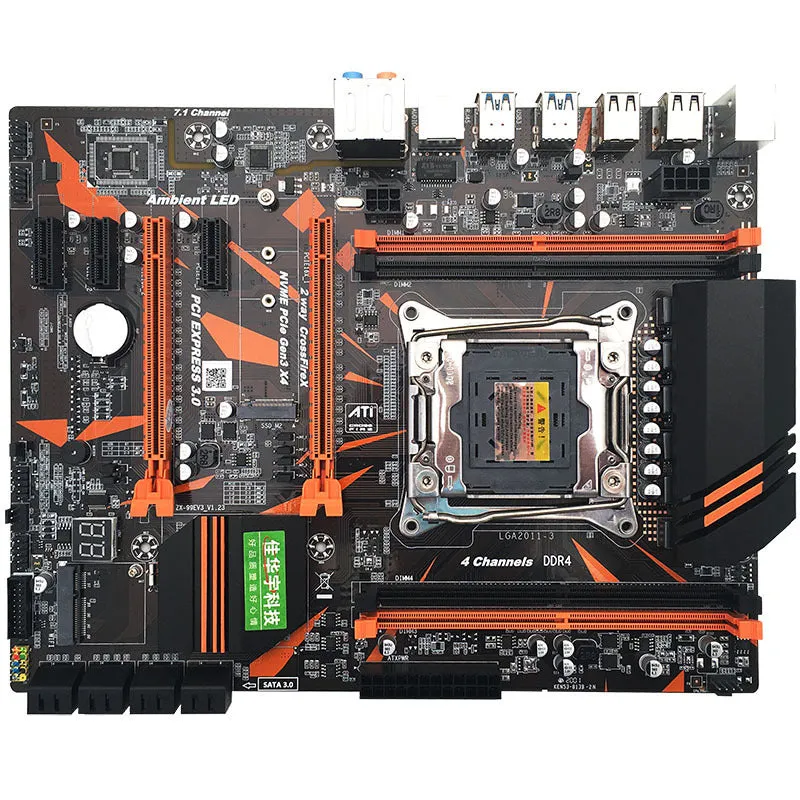
X99 computer motherboard with LGA2011-3 socket supporting Intel Core i7 and Xeon E5 processors, four-channel DDR4 memory up to 128GB, dual PCI-E x16 slots, M.2 NVMe interface, 8 SATA3 ports, and 7.1 channel audio


X99 computer motherboard with LGA2011-3 socket supporting Intel Core i7 and Xeon E5 processors, four-channel DDR4 memory up to 128GB, dual PCI-E x16 slots, M.2 NVMe interface, 8 SATA3 ports, and 7.1 channel audio
X99 LGA2011-3 Motherboard for High-Performance Computing and Workstation Builds

This X99 platform motherboard provides a versatile foundation for both professional workstation systems and high-performance computing builds. Based on the Intel X99 chipset, it features the LGA2011-3 socket that supports two distinct processor families: Intel's Xeon E5 v3 and v4 series server processors for demanding computational workloads, and the high-end desktop Core i7 series including the 5820K and 5960X models for enthusiast gaming and content creation. This dual compatibility makes it suitable for users who may upgrade their system's purpose over time without replacing the motherboard. The platform's four-channel memory architecture delivers significantly higher bandwidth than standard dual-channel designs, while the extensive expansion options accommodate multiple graphics cards, storage arrays, and peripheral devices.
Processor and Memory Configuration

The motherboard's LGA2011-3 socket accommodates processors with significant core counts and cache sizes, making it suitable for parallel processing tasks. Memory configuration requires attention to processor type compatibility to ensure optimal system operation.
CPU Socket Compatibility
The LGA2011-3 socket accepts processors from Intel's Haswell-EP and Broadwell-EP families. This includes Xeon E5 v3 and v4 series processors typically used in server and workstation environments, as well as enthusiast-grade Core i7 processors like the 5820K and 5960X. These processors differ in their memory controller implementations, which affects which types of DDR4 memory modules can be installed. The motherboard itself supports both processor families, but users must select compatible memory modules based on their chosen CPU. This dual compatibility provides flexibility for system builders who may prioritise either maximum core count for rendering and simulation tasks or higher single-threaded performance for gaming and certain creative applications.
Four-Channel DDR4 Memory
Four DDR4 DIMM slots arranged in a quad-channel configuration support memory speeds up to 2400MHz, with official support for 2333MHz operation. Each slot can accommodate modules up to 32GB capacity, allowing a theoretical maximum of 128GB total system memory. The motherboard supports both standard unbuffered DDR4 modules commonly used in desktop systems and Registered ECC (Error Correcting Code) modules typically deployed in servers and workstations for enhanced data integrity. This memory flexibility allows users to tailor their system to either maximise capacity for virtualisation and large dataset work or prioritise cost-effectiveness for general computing. The four-channel architecture doubles the memory bandwidth available compared to mainstream dual-channel platforms, benefiting memory-intensive applications.
Memory and CPU Compatibility Rules
A specific compatibility restriction exists between processor types and memory modules. When installing a Core i7 series processor, only standard desktop DDR4 memory modules should be used - Registered ECC modules cannot be installed simultaneously. This limitation stems from the different memory controllers integrated into consumer versus server processors. Conversely, when using Xeon E5 processors, both standard and Registered ECC modules are supported, though all installed modules must be of the same type. This information is crucial for system builders to avoid incompatibility issues that could prevent booting or cause instability.
Expansion and Storage Connectivity

With multiple high-speed interfaces and expansion slots, this motherboard accommodates complex system configurations including multiple graphics cards, fast storage arrays, and various add-in cards for specialised functions.
PCI Express Expansion Slots
The motherboard provides five PCI Express expansion slots: two full-length PCI-E x16 slots for graphics cards and three shorter PCI-E x1 slots for additional expansion cards like sound cards, network adapters, or storage controllers. The dual x16 slots allow configurations with either two graphics cards operating in x8/x8 mode for multi-GPU setups or a single graphics card running at full x16 bandwidth. This flexibility supports both gaming systems with SLI or CrossFire configurations and workstation builds requiring multiple GPUs for computational tasks. The three x1 slots accommodate various peripheral cards without blocking airflow to the primary GPU area, a consideration for thermal management in high-performance systems.
High-Speed Storage Interfaces
Storage connectivity includes both traditional and modern interfaces to accommodate various drive types. The eight SATA3.0 ports operate at 6Gbps speeds, supporting mechanical hard drives, SATA SSDs, and optical drives in RAID configurations for data redundancy or performance. Additionally, one M.2 PCIe NVMe interface provides direct PCI Express connectivity for the latest generation of solid-state drives, bypassing SATA bandwidth limitations to deliver significantly higher sequential read and write speeds. This M.2 slot operates at full PCIe speed rather than in SATA mode, maximising performance for NVMe drives. The combination of multiple SATA ports and an M.2 interface allows users to implement tiered storage strategies with fast NVMe drives for operating systems and applications alongside higher-capacity SATA drives for data storage.
Rear I/O Panel Connectivity
The rear I/O panel provides comprehensive connectivity without requiring additional bracket installations. It includes a PS/2 keyboard/mouse combo port for legacy peripheral compatibility, one RJ45 gigabit Ethernet port powered by the integrated Realtek RTL8111H controller, four USB 3.0 ports, and two USB 2.0 ports directly on the backplate. Additional USB connectivity includes internal headers for four more USB 2.0 ports and two more USB 3.0 ports, allowing front-panel case connections. The audio section features 7.1 channel analogue outputs with independent jacks for each channel, supporting surround sound speaker systems without requiring digital output. This comprehensive I/O selection reduces the need for additional expansion cards for most users.
Integrated Features and System Management
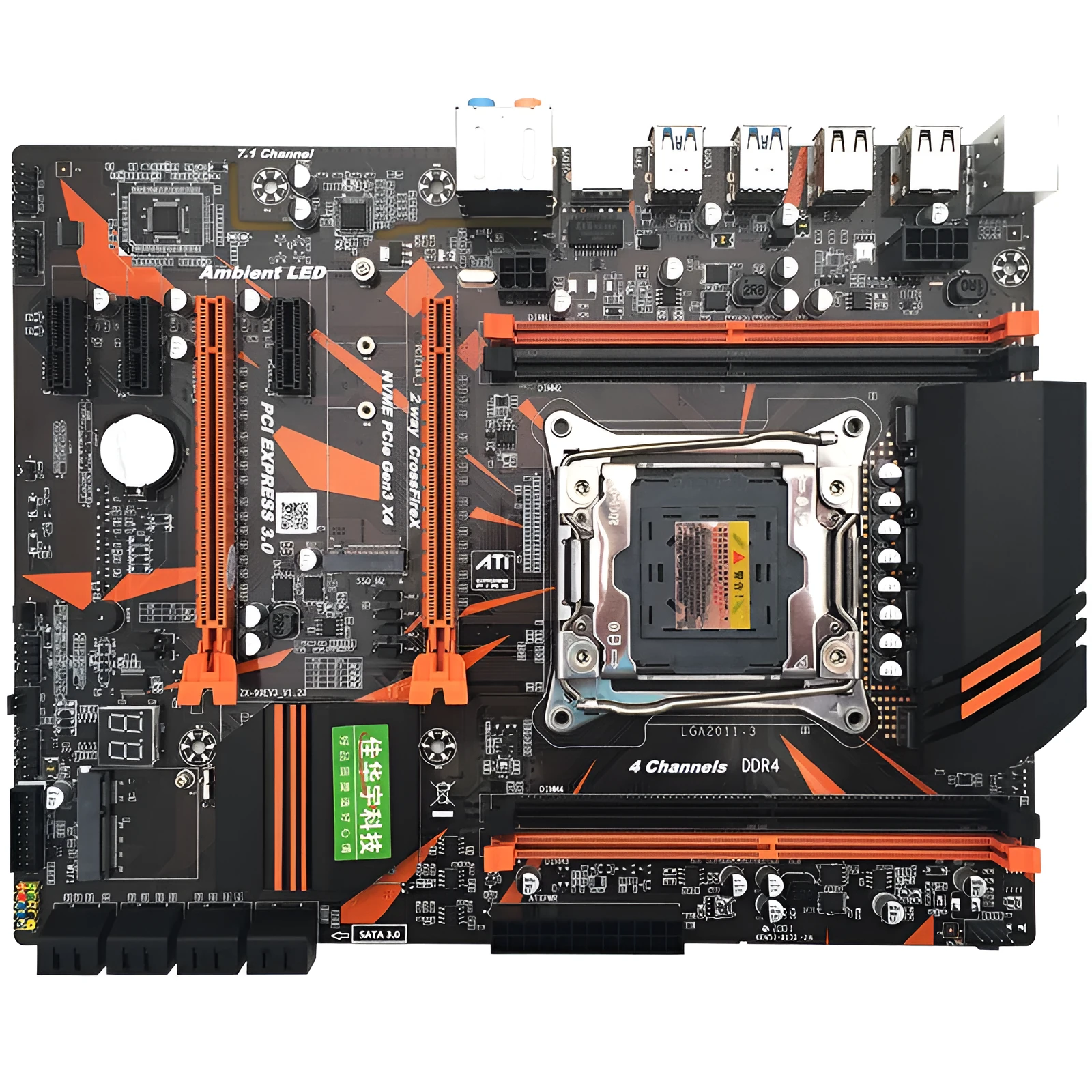
Beyond core computing components, the motherboard includes several integrated features that enhance system functionality, diagnostics, and aesthetic customisation options for finished builds.
Audio and Network Implementation
Audio is handled by an integrated 7.1 channel audio codec with dedicated amplification components for improved sound quality over basic implementations. The audio section features coloured LED illumination that provides visual indication of audio activity, which can be customised or disabled based on user preference. Network connectivity is provided by a Realtek RTL8111H gigabit Ethernet controller with advanced energy-efficient features that reduce power consumption during low network utilisation. This single integrated network solution is sufficient for most users, though the PCI-E expansion slots allow adding additional network interfaces if required for specialised applications like network storage servers or multi-homed workstations.
Diagnostic and Debugging Features
A digital fault diagnosis display provides two-digit POST code readouts during system boot, allowing technicians to identify specific initialization failures when troubleshooting. This is supplemented by a system speaker (buzzer) that provides audible beep codes for basic fault identification. Together, these features significantly simplify the process of diagnosing hardware issues compared to motherboards without such debugging tools. The motherboard also includes a WiFi expansion interface connector, allowing installation of compatible wireless network modules for systems where Ethernet connectivity is impractical. These diagnostic and expansion features make the motherboard particularly suitable for system builders who may need to troubleshoot or customise connectivity.
Power Delivery and Physical Design
Power is supplied through a 24-pin main ATX connector and an 8-pin EPS12V CPU power connector. The 8-pin connector provides sufficient power delivery for high-core-count processors under load, though the source mentions the system can operate with only a 4-pin connection when relying primarily on the main power supply. The motherboard implements four distinct power phases to efficiently deliver clean power to different system components. Physical construction includes metal-reinforced PCI-E and memory slots that withstand repeated insertion cycles and the weight of heavy graphics cards. The overall black PCB colour provides neutral aesthetics that complement various component colour schemes, though the source notes that slot and component colours may vary between production batches as products undergo continuous optimisation.