
STM32F103C8T6 ARM STM32 minimum system development board module microcontroller core board with Cortex-M3 CPU, SWD debug, 64K flash memory, Mini USB interface, 5.3cm x 2.2cm compact size for embedded systems programming
STM32F103C8T6
£12.58
Sale price
£12.58
Regular price
Skip to product information

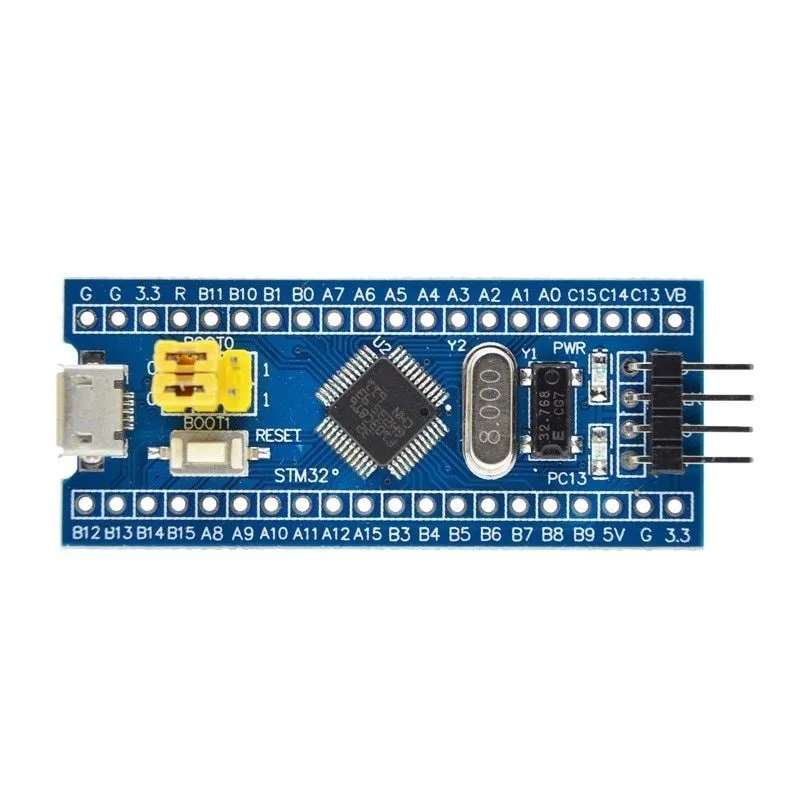 This STM32F103C8T6 minimum system board delivers a fully-configured hardware foundation for developing and prototyping embedded applications based on the popular ARM Cortex-M3 microcontroller. Designed for engineers, hobbyists, and students, it integrates the STM32F103C8T6 chip with its necessary supporting circuitry—including power regulation, clock source, and debug interface—onto a single, compact printed circuit board measuring just 5.3cm by 2.2cm. By providing these core elements pre-assembled, the board eliminates the time and complexity of designing a custom carrier board, allowing users to focus immediately on writing, testing, and debugging their application code. The inclusion of a Mini USB port serves the dual purpose of supplying power and facilitating USB communication, streamlining the setup process for many common development workflows.
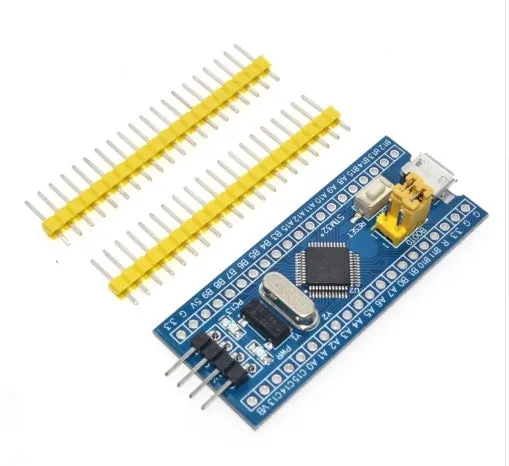 This board is built around the essential components required for the STM32F103C8T6 microcontroller to function, presented in a minimal and focused layout.
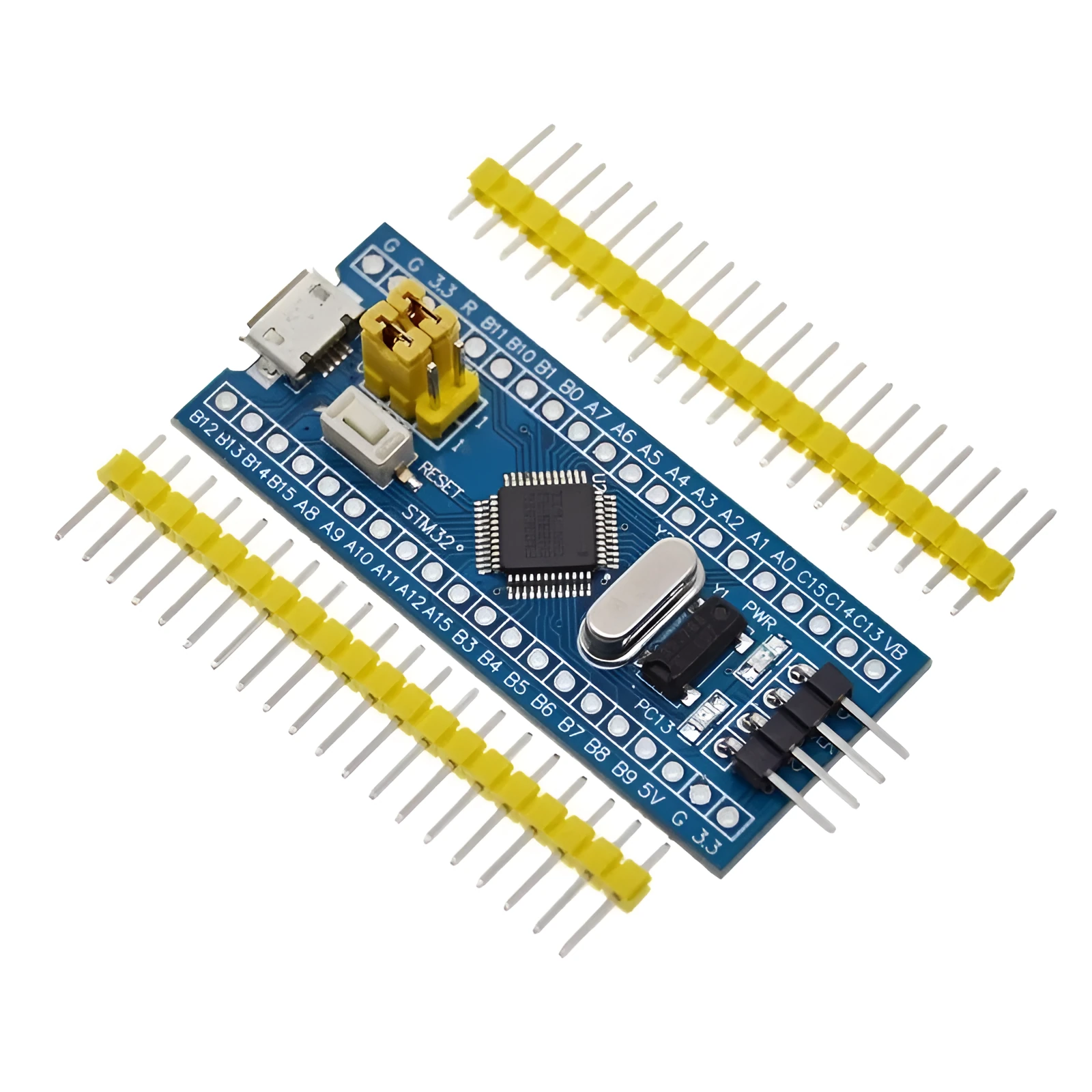 This board serves as a versatile starting point for a wide range of electronic projects, from academic learning to professional prototyping.
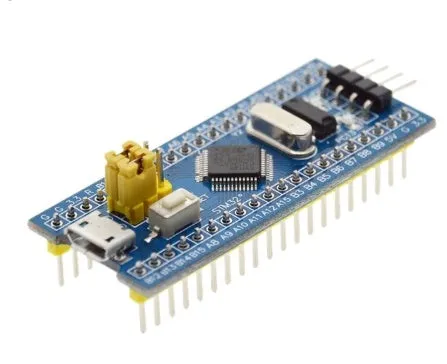 The primary value of this product lies in its integration of required components, saving time and reducing initial project complexity.


STM32F103C8T6 ARM STM32 minimum system development board module microcontroller core board with Cortex-M3 CPU, SWD debug, 64K flash memory, Mini USB interface, 5.3cm x 2.2cm compact size for embedded systems programming
£12.58
Sale price
£12.58
Regular price
STM32F103C8T6 Development Board: A Compact Cortex-M3 Core System with USB
Features and Construction
Material and Build
The primary active component is the STM32F103C8T6 microcontroller in a surface-mount package, soldered directly to the board's FR-4 substrate. Supporting this IC are the necessary passive components that form the reset circuit (POR/PDR) and decouple the power supply, alongside the crystal oscillator circuit which provides a stable 4-16MHz clock signal. A Mini USB connector is mounted on the board edge, wired to provide both 5V power (which is then regulated down to the microcontroller's required 2.0-3.6V operating range) and to connect to the MCU's USB pins for data transfer. The overall construction prioritises functionality and accessibility of the microcontroller's I/O pins, which are broken out to standard pin headers for easy connection to external sensors, displays, or other peripherals.Size and Practical Fit
The board's defining physical characteristic is its compact form factor, measuring 5.3 centimetres in length and 2.2 centimetres in width. This small size makes it highly suitable for integration into prototype enclosures, for use in portable or wearable project concepts, or simply for keeping a tidy and organised workspace. Despite its minimal dimensions, the layout provides clear labelling for the SWD debug interface pins, the main power input pins, and the vast array of general-purpose I/O (GPIO) pins from the microcontroller, ensuring that all connections remain accessible for development and testing purposes.Uses and Placement
Event or Professional Use
In educational settings like university labs or technical workshops, this board offers a cost-effective and ready-to-run platform for teaching ARM Cortex-M3 architecture, real-time operating systems, and peripheral interfacing. For professional engineers, it acts as a reliable and quick-to-deploy proof-of-concept vehicle for validating firmware algorithms or hardware interactions before committing to a custom PCB design. Its standard SWD debug interface ensures compatibility with a wide range of professional-grade tools from STMicroelectronics and third-party vendors, facilitating deep in-circuit debugging and tracing.Everyday Home Use
For electronics enthusiasts and makers, this board lowers the barrier to entry for working with powerful 32-bit ARM microcontrollers. It is ideal for personal projects such as smart home controllers, data loggers, motor drivers for robotics, or interactive art installations. The on-board Mini USB connection means that many projects can be powered and programmed using a single, commonly available cable from a standard laptop or USB wall adapter, simplifying the physical setup. The substantial 64K bytes of flash memory and 20K bytes of SRAM provide ample space for complex application code and data buffers.Benefits and Buying Value