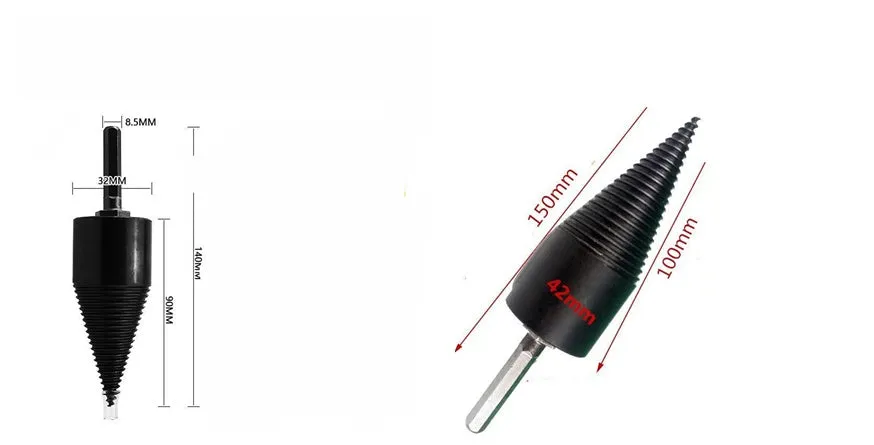
Firewood splitting drill bit for electric hand drills and electric hammers, a 42mm or 32mm hexagonal wood chopper accessory that attaches to water drill rigs for breaking logs and cutting household firewood


Firewood splitting drill bit for electric hand drills and electric hammers, a 42mm or 32mm hexagonal wood chopper accessory that attaches to water drill rigs for breaking logs and cutting household firewood
Hexagonal Wood Splitting Drill Bit for Electric Drills and Hammers

This specialised accessory transforms a standard power drill into a tool for processing firewood. Designed with a hexagonal shank, it securely connects to compatible electric hand drills, electric hammers, and water drill rigs, providing a powered alternative to manual splitting axes or wedges. It is intended for users who need to break down logs on-site, such as for campfires, wood-burning stoves, or small-scale fuel preparation. The product offers two specific fitting sizes to match different tools, focusing on a mechanical, direct-force method for splitting manageable household firewood without the need for a standalone log splitter.
Features and Construction
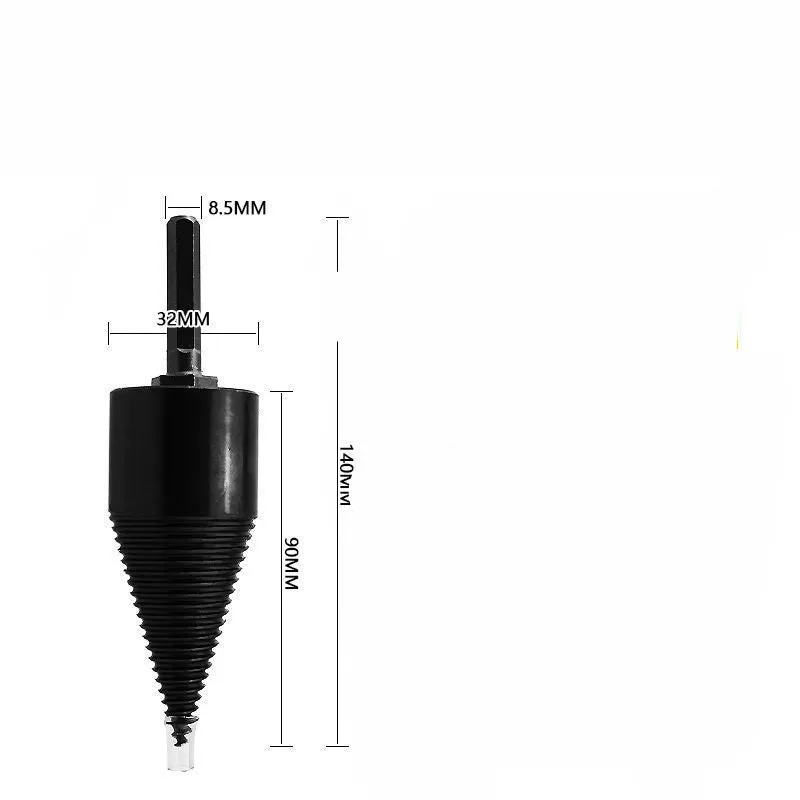
The core function of this product is its conversion of a drill's rotational force into lateral splitting power. It is not a cutting or drilling bit but a cone-shaped breaker designed to be driven into the end grain of a log.
Material and Build
The source text does not specify the metal alloy or hardening process used in the bit's construction. Its design is defined by its functional shape—a splitting cone—and its hexagonal drive shank, which is the critical interface with the power tool. This shank design is standard for securing bits in drill chucks and hammer mechanisms, ensuring torque is effectively transferred.
Size and Practical Fit
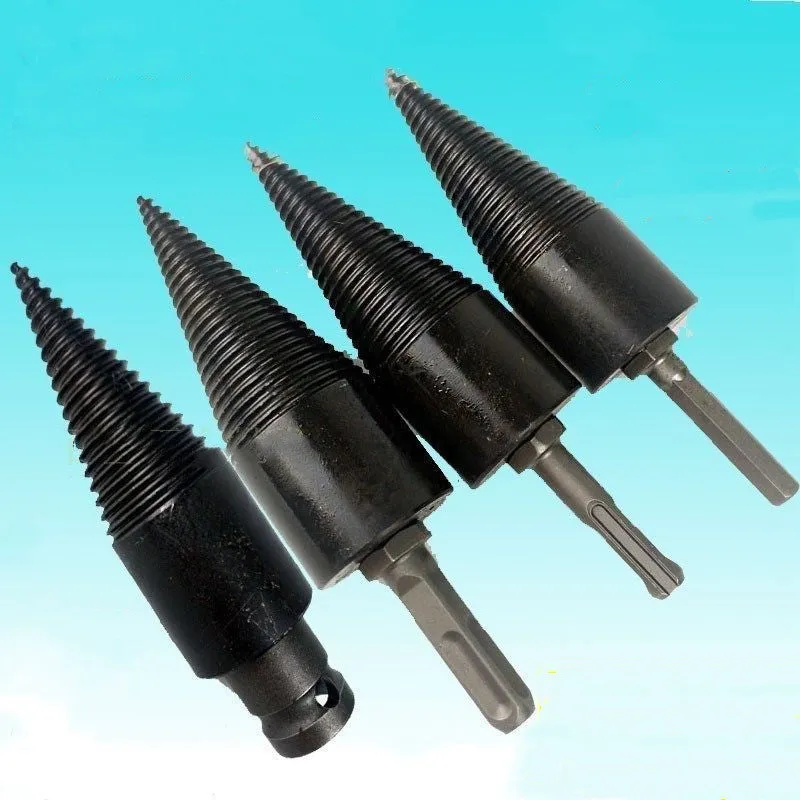
The product's primary specification is its shank size, which determines tool compatibility. The 32mm hexagonal shank is suited for standard hand-held electric drills, while the 42mm hexagonal shank is intended for more robust tools like electric hammers and water drill rigs. These are the two available configurations, offered either individually or as a set. The working diameter of the splitting cone itself is not stated, implying it is sized for typical 'household' firewood dimensions.
Uses and Placement

This bit is for splitting, not drilling. It is aimed at scenarios where powered log processing is preferable to manual labour, but a dedicated, large hydraulic splitter is impractical.
Event or Professional Use
For tradespeople or landscapers using water drill rigs or heavy-duty electric hammers on-site, this accessory can be a secondary function tool for clearing or processing timber debris. Its compatibility with such rigs makes it a potential add-on for contractors who already carry this equipment, avoiding the need for a separate splitting tool for small jobs.
Everyday Home Use
The 32mm version paired with a common corded or cordless hand drill offers homeowners a way to prepare kindling or split smaller logs for fire pits, wood burners, or outdoor heaters. It provides more control and less physical strain than swinging a maul, particularly for processing a moderate volume of wood where setting up a large splitter is unnecessary.
Benefits and Buying Value
The value lies in leveraging existing tools for a new task, reducing the need for single-purpose equipment and saving storage space.
Reuse and Low Maintenance
As an accessory, it has no moving parts or power source of its own, minimising maintenance. Care would involve basic cleaning and inspecting the shank and cone for damage after use. Its longevity is directly tied to the material quality, which is not specified, so it should be used within the capacity of the host drill and on wood appropriate to its size.
Why Choose This Product
Choose this if you already own a compatible electric drill, hammer, or water drill rig and have a recurring need to split small to medium-sized logs. The choice between the 32mm or 42mm version, or the set, depends entirely on the tools you intend to use it with. It solves the specific problem of wanting powered log splitting without investing in a standalone, bulky machine.